

способный
ЧЕРТЕЖ
Nine Ideas That Changed Education — and What Comes Next
For more than a century, the most important experiments in education have begun with a deceptively simple question: What if children are capable of more than the systems around them allow?
Maria Montessori put real materials in children’s hands and trusted them to work. Waldorf protected imagination, rhythm, craft, and the inner life of childhood. Reggio Emilia saw that rooms, light, and relationships also teach. Outdoor education returned childhood to the weather. Wilderness programs returned it to uncertainty. Project-based schools asked children to make things that mattered beyond the classroom. Learner-driven schools made the child the protagonist again.
Each movement challenged a different assumption about what education is—and what a child can become.
But the children entering school now will inherit a world those pioneers could barely imagine. Machines can write, draw, code, and answer in seconds. Information is everywhere. Screens often stand between children and the living world. Ecosystems are under unprecedented pressure. Many of the skills that once marked a highly educated adult can now be perfectly imitated by software.
So, the next question has to be larger.
What happens when learning is designed not only to develop the child, but to improve the living systems the child touches?
That is the territory of Regenerative Education. That is the territory Able exists to explore.
PART I: THE CHILD
Montessori — Agency and the Hand
Montessori challenged one of schooling’s oldest habits: the belief that children learn mainly because adults teach them. She saw something else. Give a child a prepared environment, good materials, freedom inside clear boundaries, and enough uninterrupted time—and the child begins. They repeat. Concentrate. Correct. Discover. Master.
The hand matters. The room matters. Independence matters. The deeper idea was never only the wooden beads; it was the realization that the child is an active builder of their own development. That idea changed education, and it remains undeniably true.
Waldorf — Protecting Imagination
Where Montessori trusted purposeful independence, Waldorf protected another part of being human: imagination, story, art, craft, rhythm, and the pace of growing up.
There are parts of a person that no standardized test can hold. This matters even more now. When machines can produce a competent answer almost instantly, imagination, taste, discernment, and the ability to make meaning become more valuable, not less. Education should grow the person who asks the question—not only the person who can generate an answer.
Reggio Emilia — The Environment as Teacher
After the Second World War, the schools of Reggio Emilia offered another gift: the understanding that children think in a hundred languages. Words. Hands. Movement. Drawing. Building. Play.
The teacher was no longer the only educator. The room taught. Light taught. Materials taught. Relationships taught. And if a classroom can teach, then a forest can teach. A river can teach. A mountain can teach.
PART II: THE EARTH
Scandinavian Forest Schools — Weather as Curriculum
In many Nordic outdoor traditions, childhood never fully left the weather. The Forest School movement gave that relationship a clearer shape: regular time outside, child-led exploration, managed risk, and a living bond with place.
The question they ask conventional schooling is simple: Why should learning stop when it rains?
Mud asks for different decisions than a polished floor. A wet stone demands attention. Cold asks the body to adapt. A fallen branch becomes a tool, a structure, a measurement problem, or a world. Nature does not rearrange itself around a child’s convenience. The child learns to rearrange themselves around reality.
That kind of adaptation stays in the body forever.
Wilderness Education — Challenge as Teacher
Wilderness immersion takes this idea further. On a trail, many of the usual markers of success lose their power. Rain does not care about social status. A hard climb cannot be completed by showing a certificate.
You need awareness. Judgment. Cooperation. Patience. Sometimes, you need another person’s hand.
Comfort can hide what a child is capable of; challenge reveals it.
PART III: THE SYSTEM
Green School — Ecology Becomes Architecture
Then, Bali asked a different question: What if a school did not only teach sustainability, but looked like it believed in it?
Bamboo instead of the usual concrete box. The jungle invited inside the day. A thinner wall between the school and living systems. The deeper contribution here is structural: the physical environment of education can embody the future the school claims to teach.
High Tech High — Consequential Projects
In San Diego, High Tech High made project-based learning visible at scale. A worksheet exists merely to prove that a student understood something. A real project exists because something needs to be understood, made, said, or solved.
The audience can be larger than the teacher. The work can leave the room. Knowledge becomes useful. Learning fundamentally changes when a child’s work has somewhere real to go.
Camp Kinderland — The Temporary Society
Schools are not the only places where an educational philosophy can live. For a century, Camp Kinderland has shown that a camp can be more than recreation. For a few weeks, children inhabit a small culture. They practice belonging, responsibility, difference, and shared ritual. Values stop being posters on a wall and become something children live together.
Acton Academy — The Learner as Protagonist
Acton turned another industrial habit around by reframing the adult as a guide rather than a lecturer. What if students set goals, discuss, take on real quests, and carry more of the journey themselves? The child becomes the protagonist of a Hero's Journey, not a passenger.
PART IV: WHEN INTELLIGENCE BECOMES ABUNDANT
Montessori gave us agency. Waldorf protected imagination. Reggio gave us environment. Outdoor traditions returned us to weather. Wilderness gave us challenge. Green School made ecology structural. High Tech High gave projects consequence. Kinderland showed what a culture can hold. Acton made the learner the hero.
Then, the world changed again.
Artificial intelligence began doing in seconds what once took hours of skilled human work. If answers become cheap, education has to ask a harder question: What becomes more valuable when intelligence is abundant?
Attention. Judgment. Curiosity. Courage. The ability to stay with a difficult feeling. Relationships. Embodied experience. Ethics. Knowing when to use a machine—and when to close it.
And perhaps something larger still: Contribution.
THE TENTH PROPOSITION: ABLE TO REGENERATE
Able begins here. In Thailand, children step into forests, rivers, caves, coastlines, and communities. They meet nature. They meet one another. Eventually, they meet themselves.
Able did not invent the lineage above. We inherit it. But we gather these inheritances around one vital evolution: Progressive education asks how learning can better develop the child. Regenerative education also asks what that child’s learning gives back.
What is Regenerative Education? Regenerative Education connects the growth of the learner with the health of the living systems around them. Learning becomes a process of building capability while creating meaningful value for people, communities, and the living world.
This is where Able’s three pillars meet.
1. HNBL (Holistic-Nature-Based Learning)
At Able, nature is not the backdrop. It is the teacher, the constraint, and the feedback. A forest gives a child information no worksheet can copy: temperature, distance, texture, sound, uncertainty, scale. A river changes. A rock resists. Mud moves. Children preparing for an age of artificial intelligence still need to be literate in the living world. The screen has its place. So does the waterfall.
2. MSEL (Mindful Social-Emotional Learning)
Then the work turns inward. What happens when a plan fails? When another child disagrees? When fear arrives before a climb? When a child has something true to say and cannot yet find the words?
Able’s Mindful Social-Emotional Learning begins with noticing. The pause. The breath. The feeling. The other person. The next choice. In a world of accelerating machines, emotional regulation is not decoration. It is infrastructure.
3. RPBL (Regenerative Project-Based Learning)
Then learning moves outward again. A good project asks a real question and makes something through the search. Able adds another question: What does the project leave behind?
A local project can connect a child with makers, ecosystems, and neighbors. The object matters, but the relationships made while making it matter just as much. Children do not only learn about the world. They practice improving it.
BEYOND THE CERTIFICATE ECONOMY
For a long time, education has spoken in credentials: the school, the grade, the certificate, the network. Those signals still matter. But when a machine can produce a polished essay, passing information forward is no longer the most interesting proof of a person's worth.
The better questions become: Can this person think for themselves? Can they stay with uncertainty? Can they work with people unlike them? Can they make something useful? Can they care?
So the path evolves:
Credential ➔ Capability ➔ Contribution.
The certificate records what happened. Capability shows what a person can do. Contribution asks what becomes possible because they can do it. Able is interested in that third territory.
Mud and Algorithms
Modern childhood is often offered a false choice: Should children return to nature, or prepare for advanced technology?
We think the question is wrong. We do not have to choose between raising a child in the mud and raising a child for the algorithms. The future needs both.
We need children who can read a forest and a digital system. Children who can work with AI and still know when human judgment matters more. Children who understand networks through computers, and interdependence through ecosystems. Children who know how to move quickly—and how to become entirely still.
The future will need more than intelligent people. It will need people capable of deciding what intelligence is for.
The Blueprint Becomes Real
The Able Blueprint is not a claim that education has arrived. A regenerative model should never be finished, because regeneration itself is a cycle. Observe. Act. Reflect. Adapt. Return. Grow again.
The movements before us changed how humanity understands childhood. Our work is to carry their questions forward. Into the forest. Into the age of AI. And into whatever comes next.
The blueprint becomes real when a child steps into the forest.
Discover upcoming Able Regenerative Expeditions in Chiang Mai and Krabi.
Soon we will made Able Tales live, and also our blockchain for regenerative finance. We are patiently training the new generation to the world of abundance and collective prosperity we can co-create when we understand that together, we are able to make the world a better place.
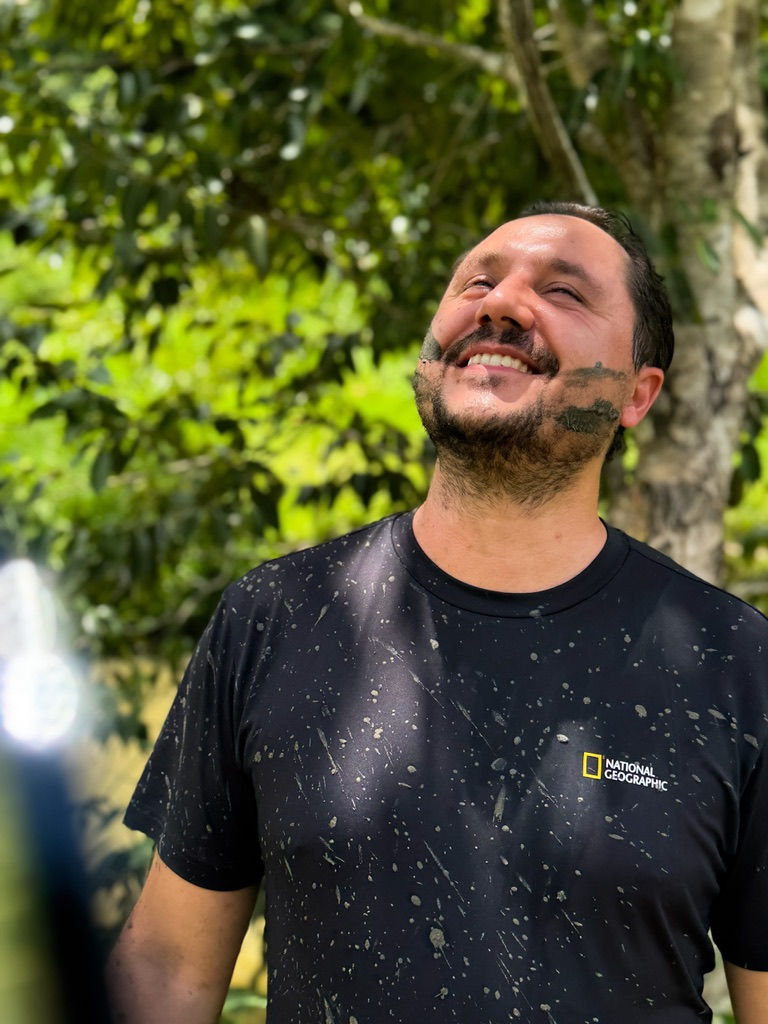
— Gui Brotto, Founder of Able, National Geographic Educator, and Ambassador & Advisor for Social-Emotional Learning and 21st-Century Skills at HundrED, Finland.
Запишитесь в список
Подпишитесь, чтобы получать обновления и узнавать больше о наших проектах по восстановлению окружающей среды.


